A quick starting point
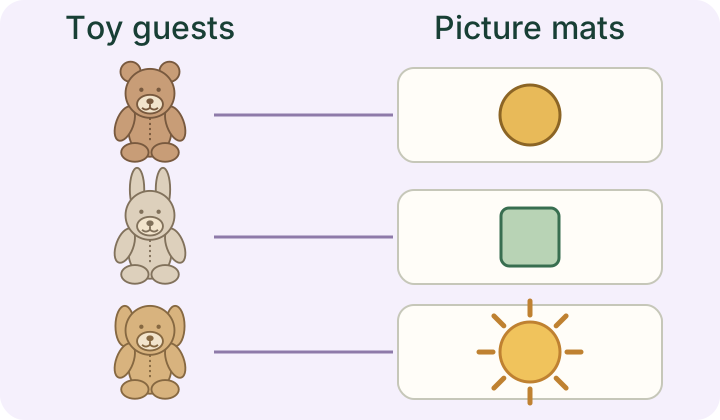
One-to-one correspondence means giving one item to each member of a group. Start with two stuffed toys and two whole picture sheets. Place one sheet beside each toy: “One for Bear. One for Rabbit.” The drawings need not match the toys. Your child can point while you move the sheets; add a third guest only if another turn is welcome.
Make a small picnic space
Choose two familiar stuffed toys without loose buttons, detachable eyes, or other loose parts and a clear tabletop or floor space where you can sit together. An adult draws one large, simple picture on each full sheet of paper: perhaps a sun and a leaf. These are pretend picnic mats, not food. Keep the sheets whole; no cutting or small counters are needed.
Place the toys in a short row with room beside each one. Leave the mats in a separate stack. The drawings can differ. Give each guest one mat; identifying animals is optional.
Give the guests their places
Invite your child to choose who arrives first. Move slowly enough that each placement is easy to see. If moving paper is awkward, your child can choose a guest with a look or gesture while you do the moving.
Show one placement
Put the sun mat beside Bear. Say, “One for Bear.” Leave it there so the pairing remains visible.
Offer the next turn
Point to Rabbit and the remaining mat. Say, “One for Rabbit.” Wait, or offer to place it together.
Look along the row
Visit each guest with your finger. Notice the toy and its mat together: “Bear has one. Rabbit has one.” Let the guests enjoy their pretend picnic.
When one guest gets two
If both mats land beside Bear, keep the moment practical. “Bear has two places, and Rabbit has no place. Shall we move this one?” Point to the empty space. You can slide a mat over together or let your child make a different arrangement before returning to the picnic.
For another round, an adult can deliberately leave one guest without a mat and ask, “Who still needs one?” Keep every toy visible while you repair the setup together. Skip the question and model the move if that makes the game friendlier.
Adjust to the play in front of you
For ages 2–3, one guest followed by a second may be plenty. Keep the same placement and short phrase across repeats. Watching you give each toy a mat is welcome participation. If your child prefers making the toys talk, join the conversation and let the pairing wait.
For ages 4–5, try three guests if your child wants more. Ask your child to prepare the mats for you, then exchange roles. You might bring in one extra mat and decide where to keep it after every guest has one. These ages suggest starting options, not milestones or required difficulty.
Add counting only if you want to
The pairing round can stay wordless. For an optional count, touch each guest once as you say, “One, two. Two guests.” Then count the two mats separately. IES suggests modeling a small count by pointing to each object and repeating the final number. IES caregiver guidance.
You can say the words while your child points. There is no need to ask for a number in return, add written numerals, or make the groups larger. If counting interrupts the pretend picnic, return to giving each guest one place.
Let the guests say goodbye
Offer the same picnic again, switch the drawings, or put the toys away together. Stop whenever your child wants to leave. NAEYC describes adults as possible play partners while children choose whether to continue. NAEYC play guidance. This picnic is our original activity; neither organization has evaluated or endorsed it.
For an optional digital turn together, Games has three free public browser games about shapes, colors, and sizes. The animal resource offers 16 printable cards per language if you want other pictures for a later activity. You do not need it to play this picnic; household materials are enough.
Questions parents ask
Must the drawings match the toys?
No. A dog can have the sun mat. The rule is one mat per guest, so matching animal names or pictures is unnecessary.
What if my child does not say any numbers?
Keep pairing, pointing, or watching together. You can model the words, or leave counting out entirely.
Keep playing together
Sources and context
- Teaching Math to Young Children for Families and CaregiversAccessed · Source language: English
- Principles of Child Development and Learning and Implications That Inform PracticeAccessed · Source language: English