A quick starting point
Before sorting a red-and-blue striped cloth, choose “all red” or “has some red.” Draw two zones on a whole sheet: matches the rule and outside the rule. With “all red,” the red item matches; the blue and striped items go outside. With “has some red,” the red and striped items match; the blue item goes outside. Use large, safe objects, show one turn, and change the rule only before a new round.
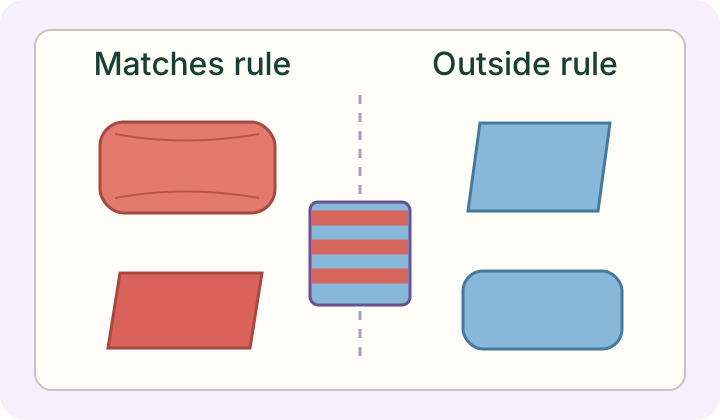
Gather a few easy-to-see choices
Use large, lightweight items your child can safely handle, such as cloths or soft toys without loose parts. An adult stays close and chooses clearly different colors. Skip small parts, fragile objects, and anything that could fit in a child’s mouth.
Draw two roomy zones on one whole sheet of paper. A red patch can remind you of the chosen rule: “all red” or “has some red.” One zone holds items that match it; the second holds everything that does not. If your items are larger than the sheet, place them beside the appropriate zone. Keep the sample visible; reading and color naming are optional.
Say the rule and show one turn
Offer the two rules before anyone places the striped cloth. You can start with, “This zone is for things that are all red.” Show the red item there, and put the blue item in the other zone. The groups do not need the same number of objects. Save the other rule for a new round.
Notice the item
Hold up one large cloth. Give your child time to look at it next to the color sample.
Choose a place
Ask, “Here or here?” A point, look, or movement can answer. You can do the placing when asked.
Describe the group
Say, “This is all red, so it matches. This blue one does not.” Keep the same rule for the whole round. Return an item to the middle if your child wants another look.
Give striped items a conversation
Bring in the red-and-blue cloth if your child is interested. Say, “It has red, but it is not all red. With our all-red rule, it goes outside.” Point to both colors before placing it. If you started with “has some red” instead, show its red stripe and place it in the matching group. Its place follows the rule, rather than a guess about which color matters most.
A pink item or a dark shade can also raise a question. Set it aside to discuss, compare it beside the sample, or choose a clearer item. You do not need to settle every color boundary. Avoid calling a reasonable choice wrong when you have not agreed on a rule for that case.
Change the rule, then rebuild
Clear both zones before changing from “all red” to “has some red.” Say the new rule aloud. This time the red item and the striped cloth match, while the blue item stays outside. Show the striped cloth moving into the group. If you later choose blue, decide between “all blue” and “has some blue” before another round.
IES encourages children to make their own rules for sorting and organizing objects. IES caregiver guidance. Our two-zone routine and striped-cloth example are original suggestions. It does not establish an outcome for our activity.
Keep the size of the game flexible
For ages 2–3, offer two items and one clear color sample. Your child can watch you sort, choose a place, or carry the same item back and forth. Repeating that simple round is enough. Save mixed colors and rule changes for another day if they interrupt the fun.
For ages 4–5, invite your child to explain the rule through actions or words, find an item that raises a question, or become the adult’s sorting guide. Use few items. An older child can enjoy the small version; a younger child can suggest another rule.
Follow the next choice
NAEYC’s play guidance includes children’s choices about the direction of play. NAEYC play guidance. If sorting becomes a blanket picnic or a soft-toy story, you can follow along. Neither source has evaluated or endorsed our activity. Stop, repeat, or tidy up together whenever you wish.
For a simpler pointing activity later, try the existing shape, color, and size walk. That walk is a different turn from choosing a rule and rebuilding these groups. If you choose a digital turn together, the public Games preview offers three free browser games about shapes, colors, and sizes. Household materials are enough for this sorting game.
Questions parents ask
Do we need to name the colors?
No. Keep the sample visible, point to it, and let your child show a choice. You can say the color name naturally.
Can we use a black-and-white print?
You need a visible color sample for this version. Add a real colored cloth beside the zone, or color the patch yourself before playing.
Keep playing together
Sources and context
- Teaching Math to Young Children for Families and CaregiversAccessed · Source language: English
- Principles of Child Development and Learning and Implications That Inform PracticeAccessed · Source language: English