A quick starting point
Choose a picture below, then select Letter PDF for 8.5 × 11-inch paper or A4 PDF for 210 × 297-mm paper. Each individual PDF has one page; each complete pack has twelve. The SVG option contains the same vector outline. Print the page you want, offer colors your child enjoys, and let them color, add marks or stop.
Choose from all twelve coloring sheets
Each card shows the complete outline and the same sheet number used in the PDF pack. Choose an individual file or the twelve-page collection. Every little read-aloud invitation and extra idea is optional.
1. Ball
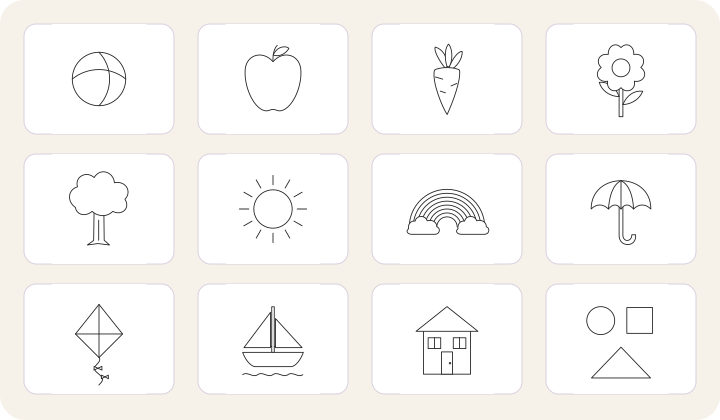
A large round ball with two curved lines dividing its panels. Leave the panels plain, fill them with different colors or cover the ball with your own marks.
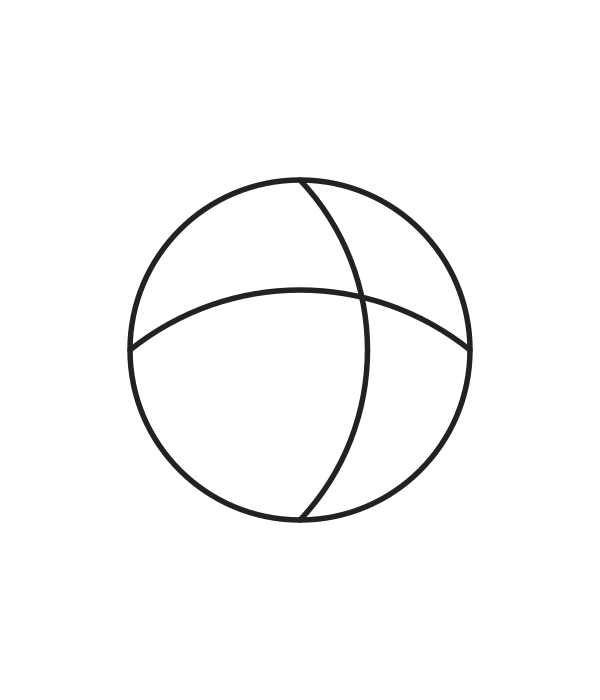
Coloring sheet Say together: What colors will your ball wear?
A simpler invitation: Make one big patch of color anywhere on the ball.
An extra idea: Choose two colors for the panels, or invent a spotted ball and draw where it might roll.
2. Apple
One whole apple with a stem and a single leaf. The large middle stays open for broad strokes; the leaf offers a smaller space if your child wants one.
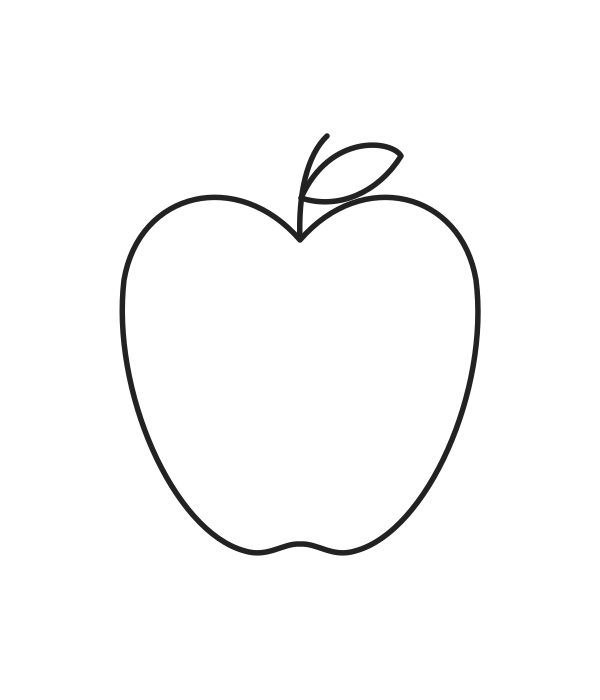
Coloring sheet Say together: What will your apple look like?
A simpler invitation: Choose a color for the large apple shape; the leaf can wait.
An extra idea: Add your own dots or stripes, or draw a pretend plate underneath the apple.
3. Carrot
A long carrot with three leafy tops and a few short lines on its root. There are no tiny background details to finish before the picture is yours.
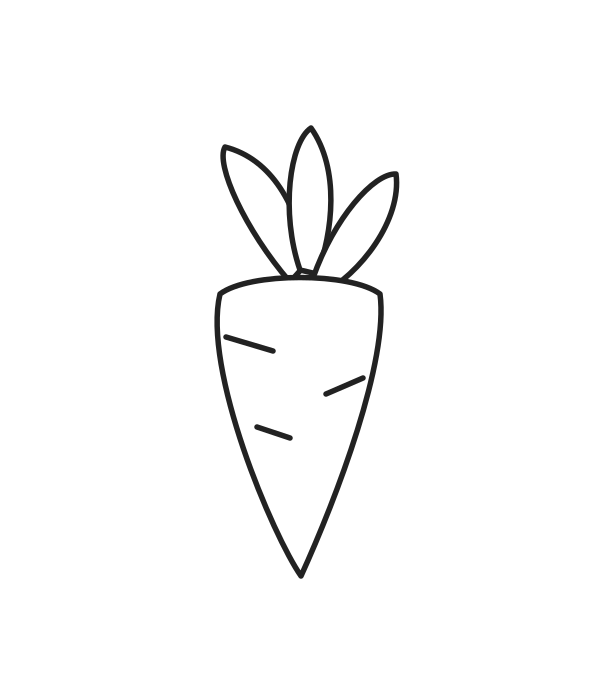
Coloring sheet Say together: Shall we color the long carrot or its leafy top first?
A simpler invitation: Make a long mark along the big carrot shape.
An extra idea: Give the top and root different colors, or draw a pretend garden around it.
4. Flower
A flower with rounded petals, a circular center, an attached stem and two leaves. Your child can work on a single part without coloring the rest.
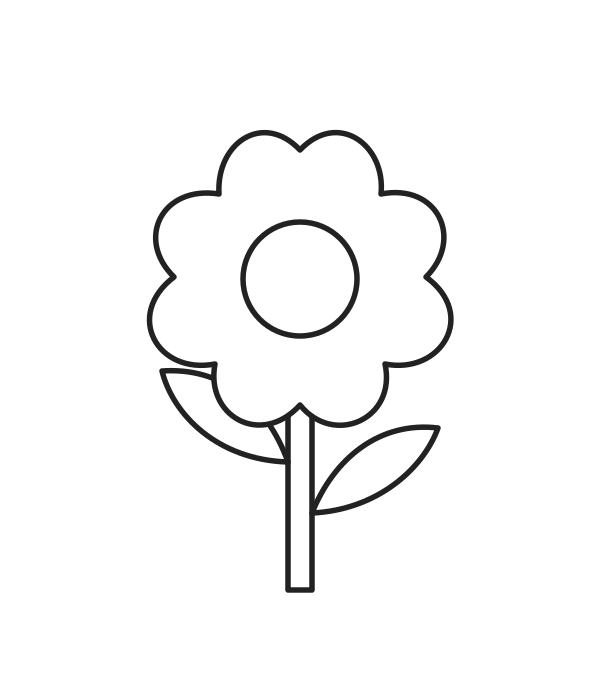
Coloring sheet Say together: Which part of your flower would you like to color?
A simpler invitation: Start with the round middle, or make marks across the whole flower.
An extra idea: Invent a petal pattern, or draw another little flower in the empty space.
5. Tree
A stylized tree with a broad rounded treetop and an attached trunk. The open treetop can hold a whole color, a collection of dots or an imaginary scene.
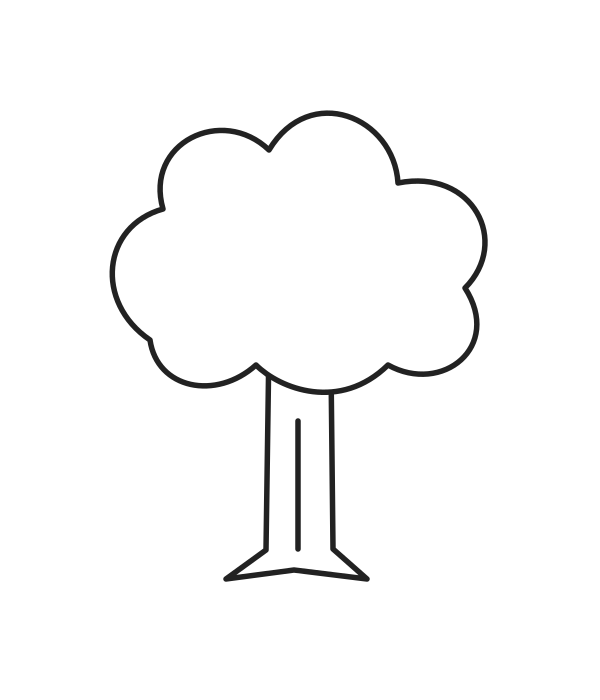
Coloring sheet Say together: What would you like to add to your tree?
A simpler invitation: Make marks in the big treetop; the trunk can stay white.
An extra idea: Add pretend fruit or a bird nearby, or tell a short story about this tree.
6. Sun
A large circle with twelve simple rays around it. The center has no face or small details, leaving plenty of space for a child's own drawing.

Coloring sheet Say together: What kind of sky will you make for your sun?
A simpler invitation: Color the big circle or make a few marks beside it.
An extra idea: Add your own sky around the sun, or draw a face if you would like one.
7. Rainbow
Seven curved bands stretch between two rounded clouds. There is no colored sample to copy: the bands and clouds can take any colors your child chooses.

Coloring sheet Say together: Which colors would you like in your rainbow?
A simpler invitation: Choose one band or one cloud to mark; leave the other spaces for later.
An extra idea: Give neighboring bands different colors, or draw something imaginary beneath the arch.
8. Umbrella
An open umbrella with four roomy canopy panels and a hook-shaped handle. Dots, stripes and plain colors can all belong on this pretend umbrella.
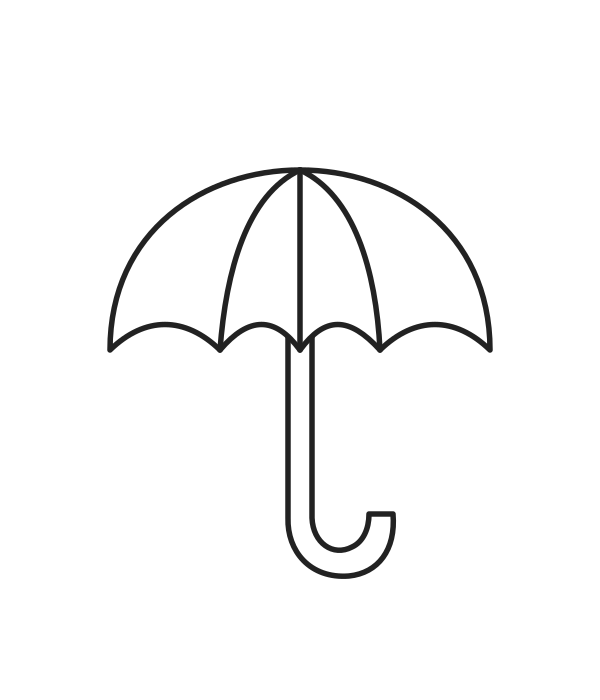
Coloring sheet Say together: How will you decorate your umbrella?
A simpler invitation: Make marks on any part of the large canopy.
An extra idea: Give the panels your own pattern, or add pretend raindrops around the umbrella.
9. Kite
A diamond-shaped kite with four panels, a wavy string and two bows. The large kite and smaller bows offer different spaces without any rule about finishing them.
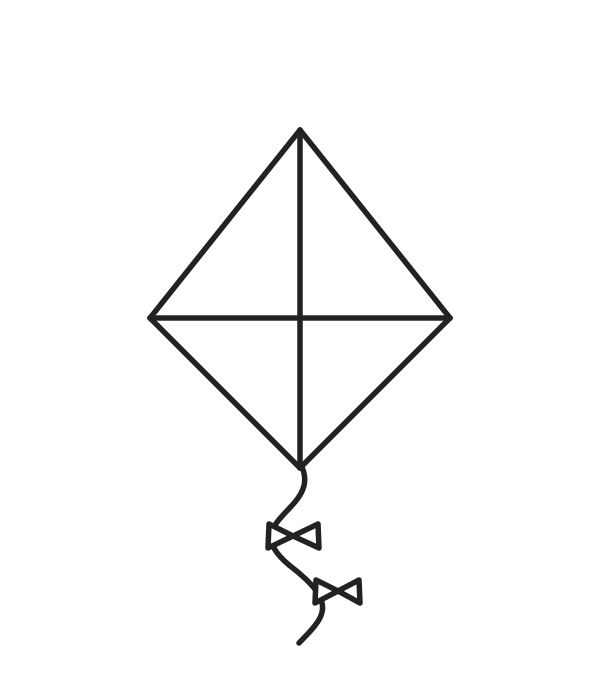
Coloring sheet Say together: Where might your pretend kite fly?
A simpler invitation: Color the big kite shape; you can skip the bows.
An extra idea: Use different marks in the panels, or add a windy sky and a place below it.
10. Sailboat
A boat with a hull, mast and two triangular sails above one wavy water line. There is plenty of empty space to invent its next voyage.
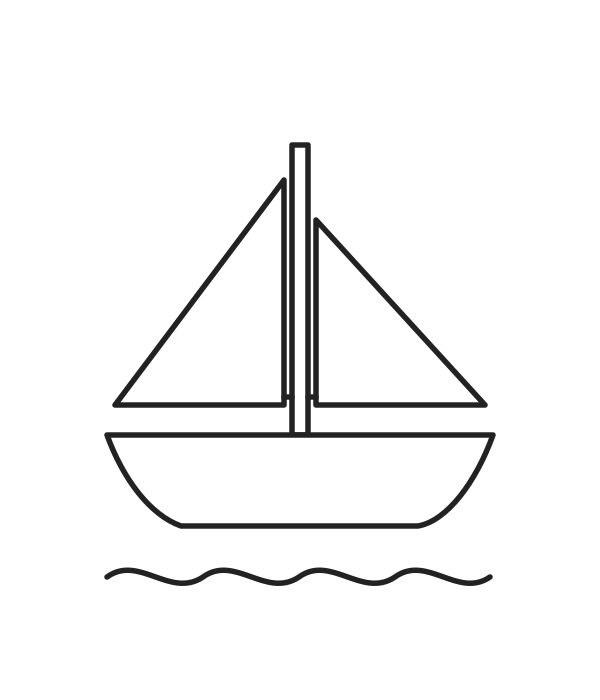
Coloring sheet Say together: Where will your little boat go?
A simpler invitation: Choose the big hull or one sail to color.
An extra idea: Give the sails a design, or draw a pretend island and tell us what the boat finds.
11. House
A simple pretend house with a triangular roof, two windows and a door. The walls are open spaces, ready for a color or any little marks your child likes.
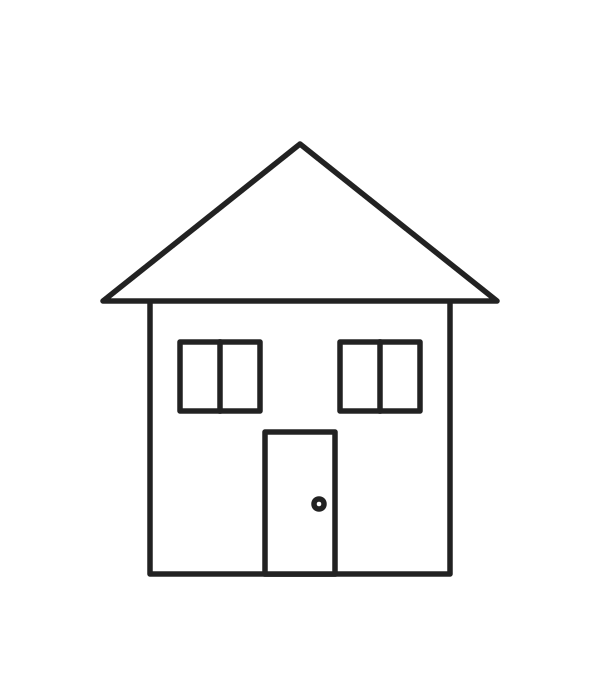
Coloring sheet Say together: Who might live in this pretend house?
A simpler invitation: Make a patch of color on a wall or the roof.
An extra idea: Add a path, a garden or an imaginary neighbor, then tell a little house story.
12. Three shapes
A circle at the upper left, a square at the upper right and a triangle below. Use the shapes as three open spaces, or turn them into your own picture.
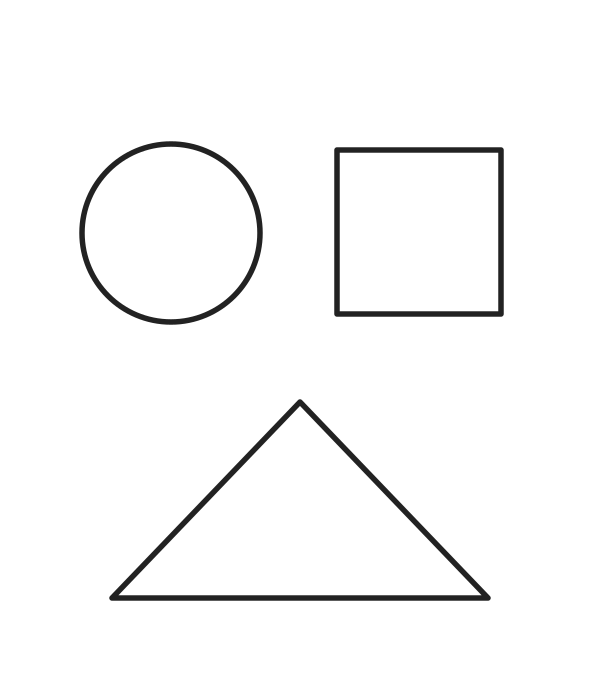
Coloring sheet Say together: Which shape would you like to choose?
A simpler invitation: Point to one shape and make marks there; naming it is optional.
An extra idea: Turn the circle, square or triangle into something imaginary by adding your own lines.
Start with one picture and a small invitation
Show two previews and ask, “Which one would you like?” Pointing, looking or asking you to choose is enough. An apple or sun offers a large open area; the kite and umbrella have several spaces if your child wants more detail. These are choices, not a ladder they must complete.
Put the page on a comfortable, stable surface and offer a few drawing materials suitable for your child, following their labels. Stay nearby to help with the page or materials. A grown-up can read the short invitation beside each picture; listening and making one mark can be the whole activity.
How to download and print the sheets
The pictures are black outlines on white, so you can print them in black and white. Both PDF sizes contain the complete drawing and a small bilingual title. The SVG download is useful if you want the vector file; for a straightforward paper copy, choose a PDF.
Choose the matching paper size
Use Letter for 8.5 × 11-inch paper or A4 for 210 × 297-mm paper. Open the individual PDF for one sheet, or the matching complete pack for all twelve.
Check the print preview
Use portrait orientation. Check that the whole drawing, title and footer are inside the page. If your printer preview trims anything, choose its Fit setting and check again; printer menus vary.
Print only what you want
For a pack, select a page number or range in your PDF viewer rather than printing all twelve automatically. The sheet numbers in the gallery match the pack order.
Keep the original for another day
Save the file if you would like a fresh copy later. Your child can return to the same picture with different colors, or choose a blank piece of paper instead.
Flexible ideas for ages 2–3 and 4–5
For a child around 2–3 who wants a simple start, offer one large space and one or two colors. They can make dots, long strokes or marks across the outline. You can hold the paper steady or color beside them on a separate sheet. There is no requirement to stay inside the lines.
For a child around 4–5 who asks for more, offer the optional extra idea beside the picture: a pattern, a background or a tiny pretend story. They can dictate a sentence for you to write in the margin. These age suggestions are flexible ways to offer support, not milestones, tests or promises about what a child should do.
Leave room for your child's own idea
NAEYC's preschool process-art guidance recommends following children's choices, noticing their marks and letting them come and go. These pre-drawn outlines are optional starting points, not fully open-ended process art. Offer blank paper too, and let your child change the picture or invent a different one.
Try a simple observation such as, “I see blue dots on your umbrella.” If your child wants to tell you more, listen; if not, keep drawing or pause. A purple carrot or a house without a finished roof does not need correcting. You can put the page away whenever the activity has run its course.
Use either language, or play another time
The downloads are shared by both language versions and carry English and Spanish picture names. You can read just the name your family prefers. Saying both is optional: “Ball. Pelota.” There is no translation quiz or required answer.
For a different read-aloud activity, our twenty picture riddles have two picture choices and answers to reveal. Our animal-name resource offers illustrated English and Spanish names. Coloring is a complete activity on its own; those links are for another visit.
The public browser Games catalog contains three free games: Shape Match, Color Match and Big & Small. If your family would like to play later, use the game link below. The printable sheets do not require an app purchase.
How this resource was made
Leelalu used AI assistance to prepare the original text, translations and vector drawings. The sheets are our own outlines, not downloads copied from another coloring library. The age ideas are editorial suggestions; no human educator, native-speaker or child testing is claimed for this resource.
Questions parents ask
Are the coloring pages free to download?
Yes. Choose an individual SVG, Letter PDF or A4 PDF, or one of the complete twelve-page PDF packs. The files can be used without purchasing an app.
Does my child have to stay inside the lines?
No. The outlines are invitations. Your child can color across them, add their own drawing, switch to blank paper or stop.
Which files should I print?
For a simple paper copy, choose the PDF that matches your paper: Letter or A4. Check the printer preview, and print an individual page or selected page numbers from the pack.
Are the English and Spanish pictures different?
No. Both versions use the same twelve original drawings and shared download files. The printed PDF titles are bilingual; the parent prompts on this page are fully available in either language.
Keep playing together
Sources and context
- How Process-Focused Art Experiences Support PreschoolersAccessed · Source language: English